Soft Carrot Cake with Cream Cheese Frosting
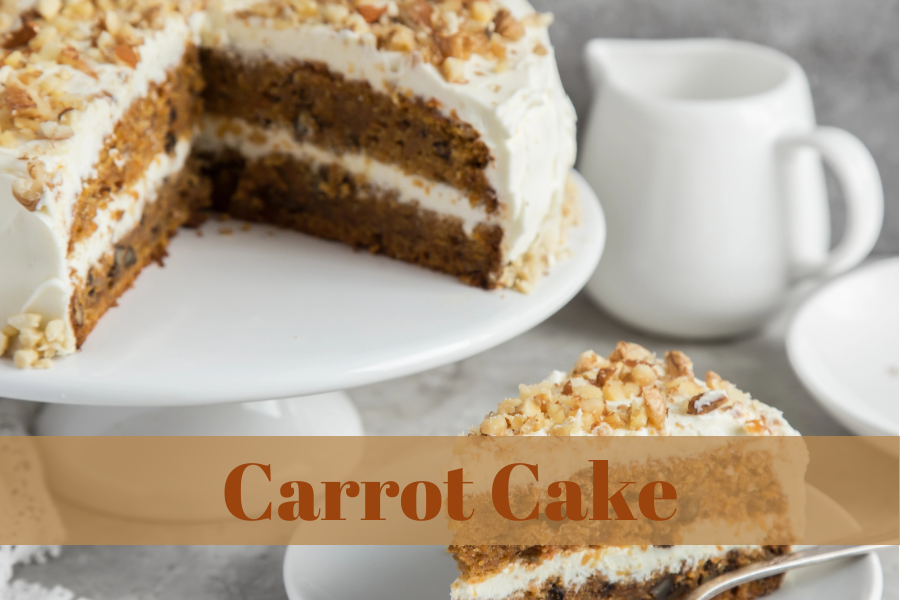
Carrot cake is a moist and flavourful dessert made primarily with grated carrots which gives it a distinctive texture and natural sweetness. Its rich, spiced flavour often comes from ingredients like cinnamon and nutmeg and is paired with a delicious and tangy cream cheese frosting. The cake is typically dense but tender, with a soft crumb. Carrot cake is versatile and can be made into different desserts such as my Carrot Cake Cupcakes!
In this blog post, you will learn how to make carrot cake.
How to Make Carrot Cake
In a medium bowl, whisk the all-purpose flour, baking soda, salt, cinnamon, nutmeg, and ginger together. Set aside.
In a separate large bowl, add the softened unsalted butter, granulated sugar, and brown sugar. Beat with an electric mixer util fully combined. Add in the vanilla extract.
Beat in each of the four eggs separately.
Slowly pour the dry ingredients into the wet ingredients beating the cake batter as you pour it in.
Lastly, add the grated carrots to the cake batter.
Divide the batter evenly between two, grease 9” cake tins and bake for 50 minutes or until a toothpick inserted comes out clean.
Let cool in the cake tins for 10 minutes, then remove and let the cakes continue to cool until on a cooling rack.
Once the cakes have fully cooled, take one of the cakes and slice off the top so that you have a flat cake to ice. Ice the top of the cake with the cream cheese icing then add the second cake on top of the iced cake. Make sure to slice off the top of the second cake.
Fully ice the whole cake with the rest of the cream cheese icing. You can serve it with just the icing, or you can top it with crushed or whole walnuts.
Keep in the fridge until ready to serve!
Storage
You can store your carrot cake, frosted or unfrosted, at room temperature for 1-2 days. Tightly wrap the cake in plastic wrap or place it into an airtight container. Make sure to keep it in a cool, dry place and out of direct sunlight.
You can store your cake in the refrigerator for 5-7 days. Make sure to wrap it well in plastic wrap or store in an airtight container.
To store your cake in the freezer, it is best to freeze it unfrosted. Place it into a freezer-safe container, and the cake can be frozen for up to 3 months.
To thaw, remove it from the freezer and let it thaw in the refrigerator overnight.
Ingredients
All-Purpose/Plain Flour: all-purpose flour forms the base of the cake which gives it a sturdy crumb. I have found that you can substitute gluten-free flour for all-purpose flour in this recipe without too much of a noticeable difference in the taste for a gluten-free carrot cake.
Baking Soda: baking soda is the leavening agent that lets the cake rise to be nice and fluffy.
Salt: salt enhances flavour.
Cinnamon: cinnamon adds a lovely spiced warmth to the cake.
Nutmeg: nutmeg is a warm spice that adds the signature aromatic flavour to the cake.
Ginger: ginger also is the other classic spice that lends its aromatic flavour to this cake which gives it its signature flavour.
Butter: butter provides richness and moisture. You can substitute the butter for vegetable oil if you want a dairy-free carrot cake.
Granulated Sugar: sugar sweetens the cake.
Brown Sugar: brown sugar adds a lovely caramel flavour as well as adding extra moisture.
Vanilla Extract: vanilla extract is used in the cake as well as the cream cheese icing to enhance the flavour profile.
Eggs: eggs bind all of the ingredients together and add structure, richness, and moisture to the batter.
Grated Carrots: grated carrots are the star of this recipe and adds the classic texture that we love about carrot cake.
Cream Cheese: cream cheese is the base of the icing while providing a rich and tangy taste to the cake.
Icing Sugar: icing sugar sweetens the cream cheese frosting and ensures a smooth and spreadable consistency.
Heavy/Double Cream: heavy cream adds richness to the frosting and once beaten into the frosting adds a light and fluffy texture.
Tips
- If you only want one layer of cake, you can bake the batter all in one 9” pan. I find that it takes a long time to bake the cake this way. It will roughly take 1 hour and 50 minutes to bake this way.
Interested in Other Dessert Recipe? Try these here!
- No Bake Cherry Cheesecake
- Peach Cobbler
- Pear Pie
- Fudgy Brownies
- White Chocolate and Raspberry Muffins
- Oatmeal Chocolate Chip Cookies

Carrot Cake Recipe
Ingredients
Carrot Cake Ingredients
- 2 c. all-purpose/plain flour
- 2 tsp. baking soda
- 1/2 tsp. salt
- 2 tsp. cinnamon
- 1 tsp. ginger
- 1/2 tsp. nutmeg
- 1 c. butter
- 1/2 c. sugar granulated
- 1 1/4 c. brown sugar
- 1 tsp. vanilla
- 4 eggs
- 5-6 medium carrots approx. 3 c., peeled and grated
Cream Cheese Icing Ingredients
- 8 oz. cream cheese softened
- 3/4 c. icing sugar
- 1/2 tsp. vanilla extract
- 1/2 c. heavy/double cream
Instructions
Carrot Cake Instructions
- Preheat the oven to 350℉/176℃/Gas Mark 4.
- In a medium bowl whisk the all-purpose flour, baking soda, salt, cinnamon, and nutmeg together. Set aside.
- In a large bowl, beat the softened butter, granulated sugar, and brown sugar. Add the vanilla extract. Beat in one egg at a time until they are all incorporated into the wet ingredients.
- Slowly pour the dry ingredients into the wet ingredients, beating as you pour them in until a thick batter is formed.
- Fold in the grated carrots. Pour the carrot cake batter evenly into two greased 9” round cake pans.
- Bake for 50 minutes to 1 hour or until a toothpick inserted comes out clean.
- Remove from the oven and place onto a cooling rack.
Cream Cheese Icing Instructions
- Place the softened cream cheese into a large bowl and beat for 1 minute with a hand mixer until smooth. Add the icing sugar and continue to beat until all the icing sugar is fully incorporated into the cream cheese and smooth.
- Pour in the vanilla extract and heavy cream and beat for about 3 minutes until the icing begins to form peaks and is thick.
- Keep in the fridge until the cupcakes are fully cooled and ready to be iced.
Preparing Your Carrot Cake
- Once both 9” cakes have fully cooled, place one of the cakes onto a plate and ice only the top part of the cake. Place the second cake onto the top of the iced cake and fully ice the whole cake.
- (Optional) Top the cake with whole walnuts or walnut pieces.
- Keep in the fridge until ready to consume.
Notes
Author: Sarah Young
Carrot Cake FAQ
Why is my carrot cake dry?
Carrot cake can turn out dry if it’s overbaked or if there isn’t enough oil or moisture-rich ingredients like applesauce or crushed pineapple. Be sure to measure flour correctly (spoon and level) and remove the cake as soon as a toothpick comes out with a few moist crumbs.
What makes carrot cake so moist?
Oil instead of butter, freshly grated carrots, and ingredients like applesauce or pineapple all help create a super moist carrot cake. Also, avoid overmixing the batter, which can make the cake dense.
Should I use oil or butter in carrot cake?
Most traditional carrot cake recipes use oil because it creates a softer, more tender crumb and keeps the cake moist longer than butter.
Can I make carrot cake without pineapple?
Yes! Carrot cake without pineapple is very popular. Simply omit it or replace it with applesauce for moisture while keeping the flavor classic.
Can I make carrot cake ahead of time?
Absolutely. Carrot cake actually tastes better the next day. You can bake the layers 1–2 days in advance and store them tightly wrapped in the refrigerator before frosting.
Does carrot cake need to be refrigerated?
Yes, if it has cream cheese frosting. Store it covered in the refrigerator for up to 4–5 days. Let slices come to room temperature before serving for the best texture.
Can I freeze carrot cake?
Yes. Freeze unfrosted layers tightly wrapped for up to 3 months. You can also freeze frosted slices, though the texture of the frosting may slightly soften after thawing.
What nuts are best in carrot cake?
Walnuts and pecans are the most common choices. They add texture and balance the sweetness, but they’re completely optional.
Can I turn this carrot cake recipe into cupcakes?
Yes! Divide the batter into lined muffin tins and bake at 350°F (175°C) for about 18–22 minutes, or until a toothpick comes out clean.
Why did my carrot cake sink in the middle?
This usually happens if the cake was underbaked, the oven door was opened too early, or too much baking soda was used. Also, make sure your leavening agents are fresh and accurately measured.
In this blog post, you learned how to make carrot cake.