Easy Homemade Sandwich Bread Recipe (Soft and Fluffy White Bread)
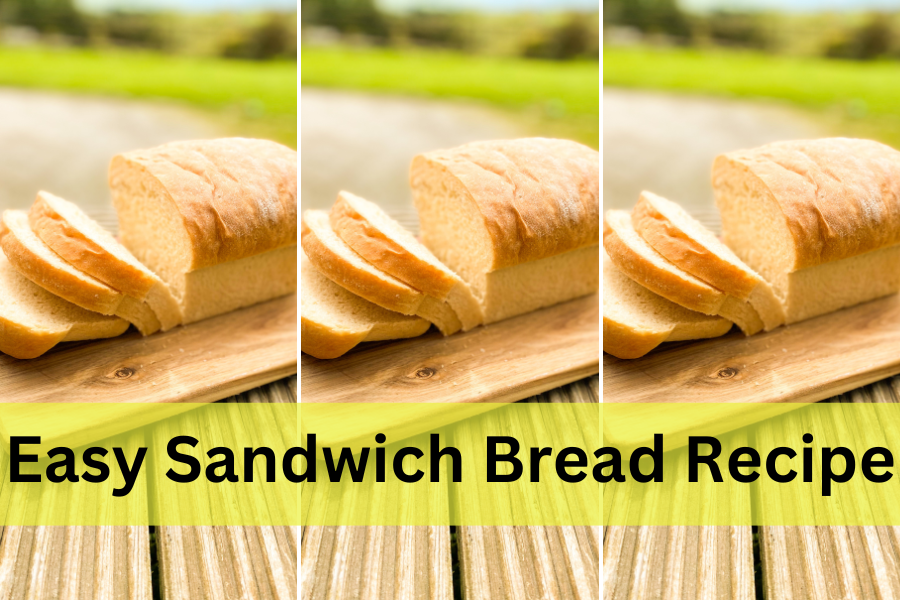
Making homemade sandwich bread has never been easier with this recipe. Sandwich bread is very versatile because it slices easily and maintains its shape making it the perfect bread for Grilled Cheese Sandwiches, French toast, or even just eating it with butter! Easy to make and incredibly soft and fluffy, this sandwich bread recipe is sure to become a favourite in your home and kitchen.
In this blog post, you will learn how to make sandwich bread.
Why Make Your Own Sandwich Bread?
There are many benefits to baking your own sandwich bread. I have a few main benefits listed below.
- Freshness: homemade bread is often fresher than store bought bread and perfect for this Tomato Sandwich Recipe!
- Quality Ingredients: you get to decide the ingredients that go into your bread so you are able to make high quality bread at home.
- No Preservatives: there are no preservatives in homemade bread. This helps to make it healthier for you and your family. Normally, store bought bread has preservatives in it.
- Cost-Effective: by baking your own bread regularly, it is possible to be quite cost-effective and to save money.
- Sense of Accomplishment: baking your own bread comes with a sense of accomplishment. It is a skill that rewards you every time you pull a perfectly, golden-brown loaf from the oven!
Baking your own bread is a great skill to learn and is incredibly enjoyable to learn. With this easy bread recipe, you will be baking your own perfect bread loaves in no time.

Do I Need a Bread Machine or Stand-Mixer?
While a bread machine is extremely convenient, this homemade bread recipe is focused on kneading and baking your bread in the oven.
You can use a stand-mixer for the mixing portions in this recipe; however, the instructions in this recipe are focused on making bread without a stand-mixer.
Do I Have to Use Strong Flour/Bread Flour?
No, you do not need to use strong flour. The benefit to using strong flour is that it gives the bread a nicer flavour and makes it chewier; however, you can easily substitute strong flour with all-purpose flour or plain flour.
How Long Can I Keep Homemade Sandwich Bread For?
Room Temperature: you can store homemade bread at room temperature for about 2-3 days. Leaving it uncovered can cause it to dry out so make sure to store it in an airtight container or bread box. These methods of storing will help the bread to retain its moisture.
Refrigerator: you can store homemade bread in the fridge for 5-7 days. While the fridge helps to extend the life of the bread, it can also cause your bread to dry out quickly. Store your bread in an airtight container or wrap it well in plastic wrap to prevent loss a of moisture.
Freezer: you can store homemade bread in the freezer for up to 3 months. Wrap your bread in plastic wrap or aluminum foil or in a sealable plastic freezer safe bag. To unthaw your bread, leave your frozen bread on the counter or unthaw it in the fridge.
Can I Store my Dough Overnight?
Yes, you can store your dough overnight in the fridge. Make your dough as normal and at its second proofing, wrap your dough in plastic wrap in its baking dish and place into the fridge overnight for up to 12 hours. Remove, keep covered, and leave in a warm place for 1-2 hours to rise before baking. Continue to bake as normal.
What is Yeast Activation?
Yeast activation is the process of rehydrating and activating yeast. Yeast is a living organism so by activating it you are making sure that the yeast is alive. As a living organism, yeast needs warmth and food (usually sugar) to ferment.
If the yeast does not foam or produce bubbles during activation, it may be inactive or expired, and you will need to start over with fresh yeast.
What is Proofing?
Bread proofing, also known as proving or fermentation, is the rising stage that dough with yeast undergoes before baking. This step is important in bread-making with yeast because it allows the dough to ferment, develop flavour, and rise to the desired volume.
During proofing, certain factors need to be controlled such as temperature, humidity, and proofing time. These important factors need to be controlled to achieve the desired rise and texture in the bread.
It is possible to over-proof and under-proof your bread. Over-proofing can cause the dough to collapse or become too light and airy while under-proofing can give the bread a dense and tough texture.
With practice and time, you will be able to understand what your bread needs and bake perfectly risen bread every time. Try making these Homemade Dinner Rolls or Plain Bagels next!
Ingredients
Water: warm water is essential for this recipe as the water is the liquid for the dough. The water should be warm not hot or cold to allow the yeast to activate.
Whole Milk: milk is used for a nice texture and gives extra flavour to the bread.
Instant Yeast: instant yeast once activated allows the dough to rise.
Granulated Sugar: granulated sugar feeds the yeast but also sweetens the bread.
Unsalted Butter: unsalted butter has a lower water content. Using unsalted butter and adding salt separately allows you to control how much salt is added.
Salt: salt is added to give more taste and flavour. If your bread tastes a bit bland, then not enough salt was added to the bread.
Bread Flour/Strong Flour: bread/strong flour gives more structure and creates a chewier loaf than bread with all-purpose/plain flour.
Tips
- While bread flour is preferred for this sandwich bread recipe, you can use all-purpose flour.
- If there are not a lot of bubbles in the liquid that you added the yeast to after 5 minutes, continue to let it sit covered in a warm place until there are more bubbles. This is the step of activating the yeast and without it being activated the dough and eventually sandwich bread will not rise properly.
- If your house is cold and you have problems getting your bread to rise, turn on your oven, let it warm up, then turn off. Place your bread for proofing in your warmed oven. Do NOT let your oven get too hot that it cooks the bread yet.
- To keep homemade bread fresh for as long as possible, store it in airtight containers or resealable plastic bags to prevent moisture loss and exposure to air. Avoid storing your sandwich bread near heat sources or in direct sunlight. This can cause it to dry out or become stale faster.
- If the dough gets too sticky while kneading add about a teaspoon of flour to the dough and continue to knead adding extra flour to the dough and to the worktop as needed. Only add flour as needed to prevent the dough from drying out.
- A method to check for whether your bread is finished baking is to knock on the bottom of the loaf of bread. If it is finished baking, it will sound hollow when knocked upon.
Serve with:

Sandwich Bread
Ingredients
- 1 c. water warm
- ¼ c. whole milk warm
- 7 g/1 whole packet of yeast
- 2 tbsp. granulated sugar
- 4 tbsp. unsalted butter
- 1 ½ tsp. salt
- 3 1/3 c. bread flour/strong flour plus extra as needed
Instructions
- Whisk the warm water, warm milk, whole packet of yeast, and granulated sugar together in a large bowl. Cover and allow to sit in a warm place for 5 minutes.
- Add butter, salt, and 1 cup of flour and mix with a spatula or wooden spoon. Once incorporated add another cup of flour. Mix that in. Add the last 1 1/3c. of flour into the mix and stir. There might still be chunks of butter, but that is ok.
- Knead on a floured surface for about 8 minutes adding flour as needed to prevent the dough from sticking to the surface. If dough becomes too sticky, add about 1 tsp. of flour at a time.
- Form into a ball.
- Time for the first rise. Lightly grease a mixing bowl with either olive oil or non-stick spray and cover the dough in a very light coating of oil. Place dough inside the bowl and cover with plastic wrap and a clean tea towel. Place somewhere warm and let rise for about 2 hours or until doubled in size.
- When the dough is finished rising, punch the dough down to release any trapped air inside of the dough. Pour dough out onto a lightly floured workspace. Lightly flour a rolling pin and your hands. Roll dough out into the shape of a rectangle. About 8”x15”. Make sure that width can fit into your loaf tin. Eye up the dough width with your loaf pan.
- Once the dough is rolled out, into a rectangle roll up the dough into an 8” log and place into your greased loaf tin.
- This is your second proofing. Cover the dough with either plastic wrap, aluminum foil, or a clean, tea towel and place somewhere warm for 1 hour. The dough should rise about an inch higher than the loaf pan.
- Preheat oven to 350℉/175℃/Gas Mark 4. Use the lowest oven rack in your oven to prevent the top of your loaf of bread from burning.
- Bake your bread for about 30-34 minutes.
- Remove from oven and let cool in the pan before slicing.
- Slice and enjoy!
Notes
Author: Sarah Young
Sandwich Bread FAQ
What makes homemade sandwich bread soft?
Ingredients like milk, butter, and proper kneading help create a soft, fluffy texture.
How long does homemade sandwich bread last?
Homemade bread typically stays fresh for about 3–4 days when stored properly.
Can sandwich bread be frozen?
Yes, homemade sandwich bread freezes very well for up to 3 months.
Why didn’t my bread rise properly?
Expired yeast, cold ingredients, or insufficient rising time can affect the dough’s rise.
What is the best flour for sandwich bread?
All-purpose flour or bread flour both work well, though bread flour creates a slightly chewier texture.
How do I keep homemade bread soft?
Store bread in an airtight container or bread bag once fully cooled.
Can I make sandwich bread without a stand mixer?
Yes, sandwich bread dough can easily be kneaded by hand.
Why is my sandwich bread dense?
Overpacking flour, under-kneading, or insufficient rising can create dense bread.
Can I use whole wheat flour?
Yes, but whole wheat flour may produce a denser loaf unless combined with white flour.
How do I know when sandwich bread is fully baked?
The loaf should be golden brown and sound hollow when tapped on the bottom.
Can I make sandwich bread ahead of time?
Yes, homemade bread is excellent for meal prep and freezing.
What can I serve with homemade sandwich bread?
Sandwich bread is perfect for Egg Salad Sandwiches, toast, grilled cheese, French toast, and breakfast recipes.
In this blog post, you learned how to make homemade sandwich bread.
Recipe Inspired by Sally’s Baking Addiction